



Test Bench for Hydrogen Fuel Cells: Innovation and Performance Control
In the energy transition sector, precision is everything.
That’s why today we explore the potential of the Advanced Test Bench for Hydrogen Fuel Cells (Hydrogen Fuel Cell Test Bench).
This is an integrated solution designed to analyze every operational aspect of hydrogen systems, ensuring that each unit meets the highest standards of quality and durability.
What is a fuel cell test bench used for?
The system is not a simple measuring tool, but a complete diagnostic ecosystem. Thanks to intuitive software and high-precision components, the bench allows you to monitor:
- Electrical performance: Constant-voltage, constant-current and adjustable-power tests.
- Operating efficiency: Analysis of system behavior under different load conditions.
- Durability analysis: Stress tests to assess the cell life cycle and degradation over time.
Technical Features and Components
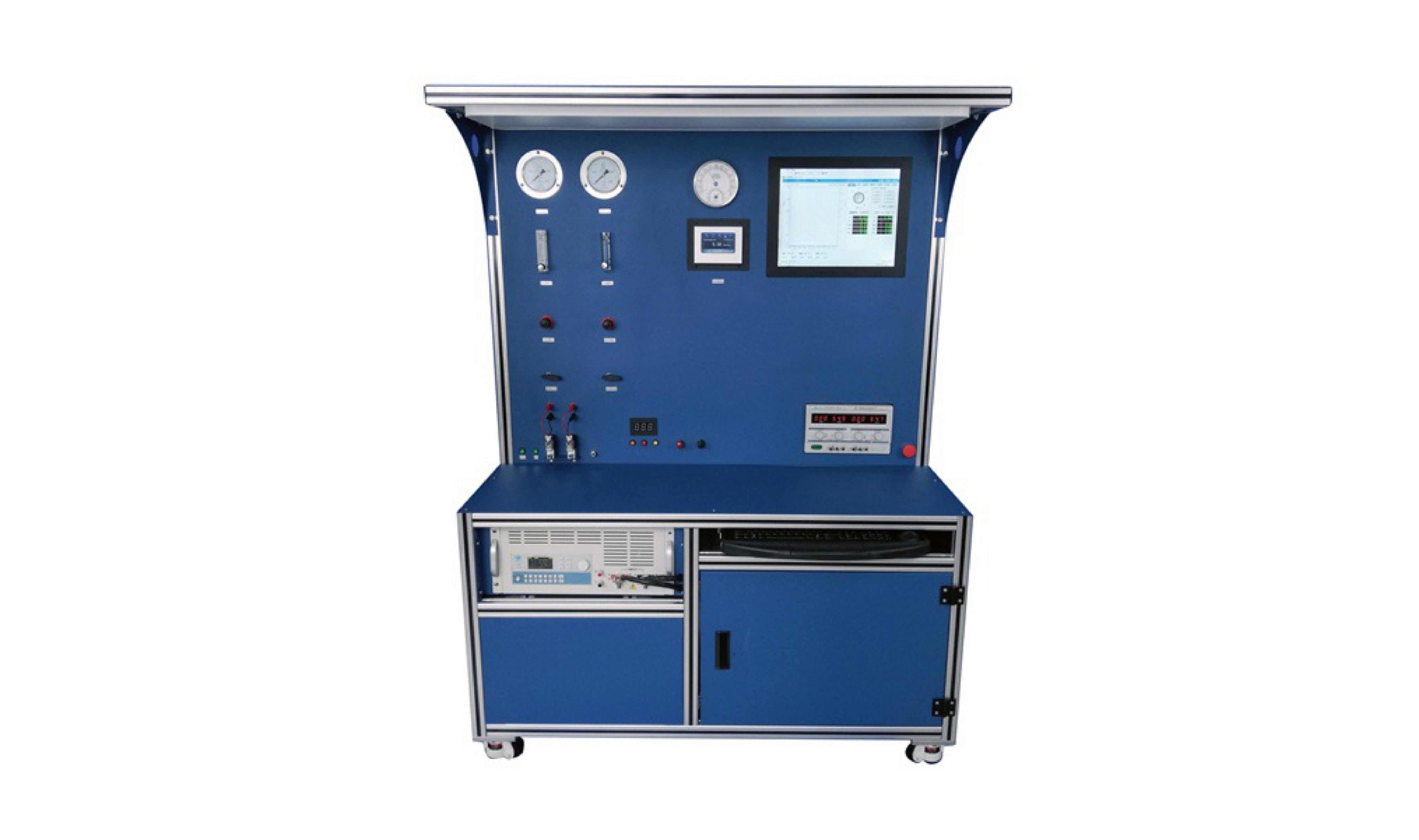
The test bench architecture is designed to offer mobility and precision. The system consists of a mobile unit and auxiliary cables, equipped with top-tier instrumentation:
| Component | Function |
|---|---|
| DC Electronic Load | Programmable to simulate real-world use scenarios. |
| Hydrogen Flow Meter | Accurate monitoring of gas consumption. |
| Exhaust System | Timing device for the safe handling of hydrogen. |
Dual DC Power Supply | Ensures stability and continuity during test cycles. |
Ease of Use and Workflow Automation
Despite the high technological complexity, operation has been optimized to make the work of specialized technicians easier.
Quick Setup: Thanks to the mobile structure, the bench can be positioned and connected quickly to the device under test.
Software Configuration: Once the gas and power connections have been checked, the operator can set the parameters via the computerized interface.
Automated Test: The system independently manages the test conditions, reducing human error.
Data Management: Results are displayed in real time and can be exported to a local database or USB devices for later analysis.
Safety and Reliability: Each test bench is designed to operate in complete safety, with gas source monitoring systems and controlled shutdown procedures.
Introduction of the system components
.png "banco-di-prova-per-celle-a-combustibile-a-idr-(1).png")
The hydrogen gas supply section is:
1 - Hydrogen pressure gauge:, shows the hydrogen pressure
3 - Hygrothermograph
4 - Hydrogen flow meter: used to display the instantaneous hydrogen flow, the cumulative flow
7 - Hydrogen rotor flow meter: adjust the hydrogen flow, increase counterclockwise and decrease clockwise, adjustable from 0-10 l/min.
9 - Hydrogen pressure regulating valve: adjust the hydrogen pressure, lower counterclockwise, higher clockwise, adjustable pressure 0-0.4 MPa.
11- Hydrogen switch: used to open and close the hydrogen outlet.
14 - Solenoid valve switch: powered control solenoid valve.
15 - Solenoid valve: used to control hydrogen interval venting, on the left is the inlet valve, on the right is the exhaust valve.
16 - Vent time display (adjustable): controls the opening and closing of the solenoid valve in an interval cycle, three keys: mode selection, key, minus key.
The air supply section is:
2 - Air pressure gauge: displays the air pressure
8 - Air rotor meter: adjust the air flow, increase counterclockwise and decrease clockwise, adjustable from 0-10 l/min.
10 - Air pressure regulator: adjust the air pressure, lower counterclockwise, higher clockwise, adjustable pressure 0-0.4 MPa.
12 - Air switch: opens and closes the air outlet
13 - Lighting switch
18 - Scram button
The load section is:
5 - Display screen
19 and 20 - Load input port.
21 - Programmable DC electronic load
24 - Computer host. The electronic load can be operated from the panel or from PC and computer.
The power supply section is:
17 - Adjustable regulated DC power supply
Misc.:
6 - Front lamp
22 - Mouse
23 - Keyboard
25 - Transport wheels
Contact us to receive a quotation or for more details.